Wingfoil Gear Guide
Wingfoiling is one of the fastest-growing wind sports today. But choosing the right wingfoil gear, from wing size to board and foil, is essential if you want to ride comfortably and progress quickly.
My name is Raph, and I run a wingfoil school in Fuerteventura, FuerteWingfoil. Very often after a few lessons students want to buy their own gear and they contact me to ask what equipment they should buy and what size would suit them.
In this guide, I’ll help you make the right choice.
The wing
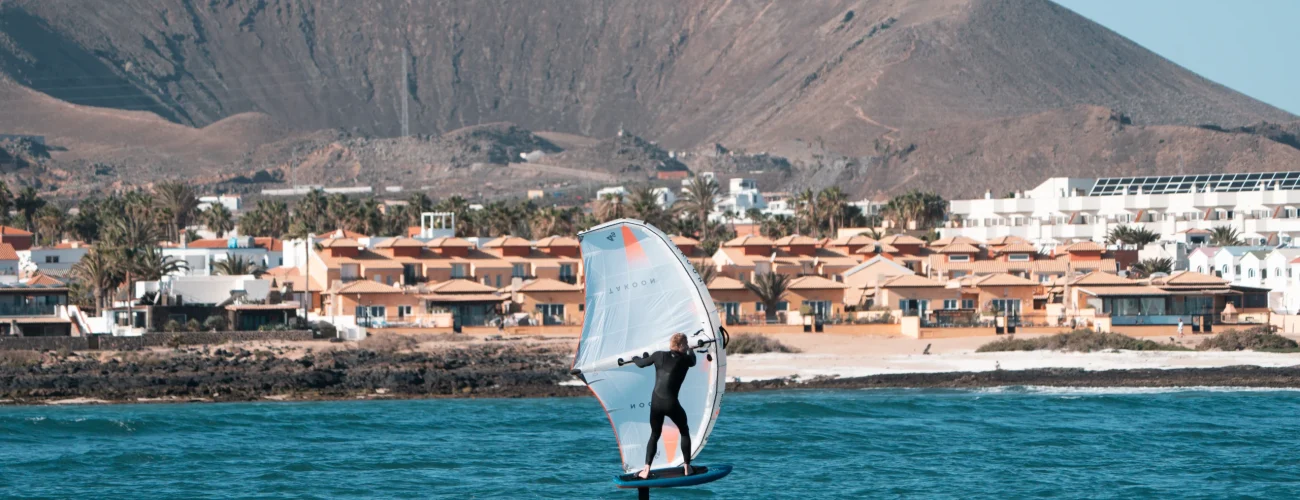
The wing is the sail you hold in your hands to catch the wind and generate power. It’s what allows you to move and glide across the water when wingfoiling.
Wings come in different sizes, measured in square meters (m²). For stronger winds, choose a smaller wing to stay in control, and for lighter winds, go for a larger wing to generate enough power. Your weight and the wind conditions at your location also affect the right wing size.
A good setup is to have two wings. One smaller and one larger, so you’re ready for any wind. For instance, a 3.5 m² wing works for strong winds, and a 5.5 m² wing is ideal for lighter conditions. Often on the website when you buy the wing, you can check the range of the wing to easier make a decision.
The board
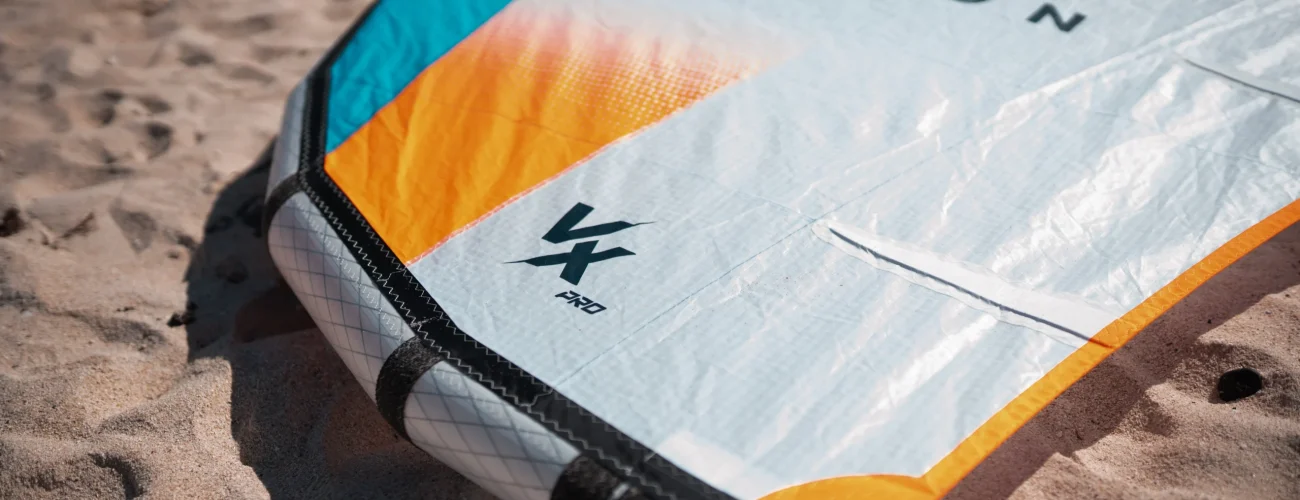
Wingfoil boards are quite different from windsurfing or kitesurfing boards. For beginners, choosing the right volume is
very important. In most cases, I recommend boards between 140 and 170 liters, as they provide enough stability and
flotation while learning.
It’s good to have a board with a lot of volume to get a lot of balance before you manage to fly. And also a wider and thicker board will generally feel more stable, which helps beginners build confidence on the water.
There are also two main types of boards: inflatable and rigid. Inflatable boards are usually cheaper and easier
to transport, but rigid boards are a little more reactive and for advanced riders.
The foil
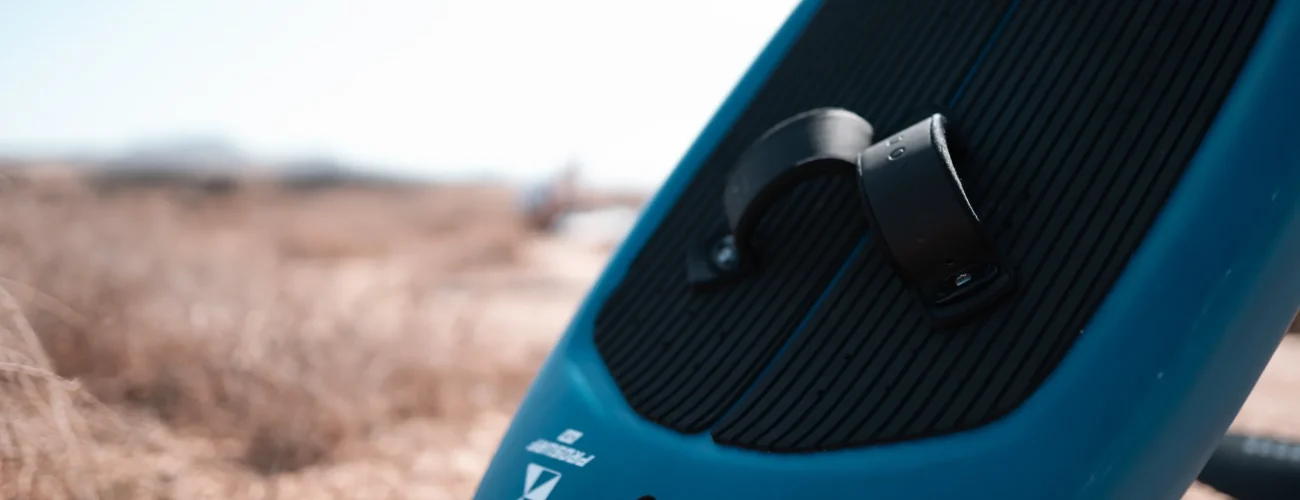
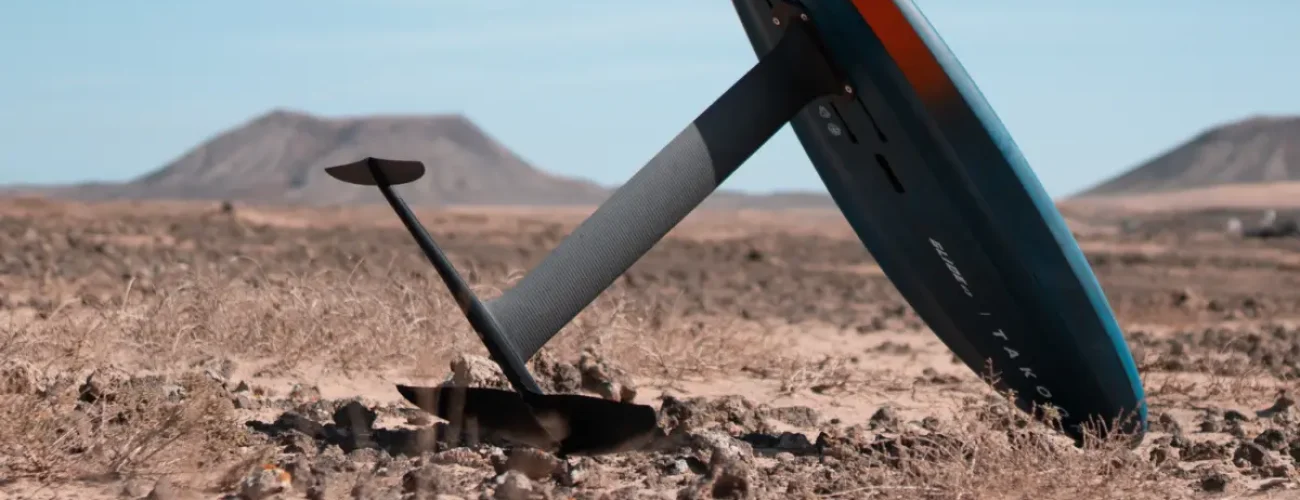
The foil is what makes wingfoiling so unique. It’s the part that actually lifts you above the water and lets you glide almost effortlessly. It’s made up of a mast, front wing, stabilizer, and fuselage, all working together to give you speed and control.
Picking the right foil setup is essential, especially when you’re starting out.
Mast: In the beginning it’s good to start with a short mast, around 75 cm. The most common mast size is 85 cm, which is the perfect size for doing everything in wingfoil. Masts come in aluminum or carbon. Aluminum is perfect for beginners because it’s durable and affordable, while carbon is more for performance and advanced riders.
Front Wing: This is the part that actually generates lift. When starting out, go for a wider, thicker front wing, somewhere between 1 500 and 2 000 cm². It gives you stability and makes those first flights much smoother. A larger front wing gives you earlier lift, more stability, and slower, more controlled riding.
Stabilizer: A larger stabilizer helps keep the board balanced and makes controlling your rides easier. Often when you buy a beginner foil, they recommend the size of the stabilizer that fits with the front wing.
📍 Tip! Don’t stress about choosing every single part yourself. Many brands offer beginner foil kits where everything is matched and ready to go, perfect for learning without guessing what fits together.
Extra equipment
In addition to your main gear, a few accessories are essential for staying safe on the water. When you’re starting out,
make sure to also use a:
- board leash
- wing leash
- impact vest
- helmet
- wetsuit
- water shoes
- pump
They can make a big difference in both safety and confidence.
For my wingfoil school here in Fuerteventura, FuerteWingfoil, I use mainly the equipment from Takoon. It’s a good brand
with good quality for a decent price. The prices are less expensive because they sell only from their own website. If
you’re looking to buy wingfoil gears you should have a look at their website.
FAQ - About wingfoil gear
Got questions about wingfoiling gear? You’re not alone! Below are some of the most common questions beginners ask when
choosing their first wing, board, and foil, along with practical advice to help you make the right choices.
What are the best wingfoil brands?
In my experience, some of the best wingfoil brands are Takoon and AFS. Takoon offers good quality at a reasonable price, as they sell directly through their own website. AFS is a French brand known for high-quality, full-carbon foils. For beginners who want a more affordable option for their first wingfoil, Gong is also a good choice.
How to choose the right foil?
Choose gear that matches your skill level and conditions. Beginners should focus on stability, while advanced riders can prioritize performance. Follow my guide to learn more.
What wing size should I use for wingfoiling?
It depends on how many wings you plan to have. Ideally, beginners have two wings: a larger one for light winds and a smaller one for stronger winds. If you only want one wing, choose a medium size that works in most conditions.
What is the best wing size for beginners?
A 5 m² wing is a great medium size for beginners, working well in most wind conditions. Bigger wings give more lift,
which helps you get flying more easily when you’re just starting out.
Inflatable vs rigid wingfoil boards - which is better?
Rigid boards are more performance-oriented and glide better, making them ideal for advanced riders. Inflatable boards
are lighter, easier to transport, and convenient for beginners who need a larger, more stable board.
What foil setup is best for beginners?
For beginners, a larger front wing between 1 500- 2 000 cm² is ideal. It provides earlier lift, more stability, and a
balanced ride, making learning easier.
📍 Good to know! Choosing the right gear also depends on your experience and personal preferences. The best approach is to
take a few lessons with a local instructor. They can guide you, help you try different equipment, and recommend the
setup that suits you best. Many of my students get their first wingfoil setup this way.
Want to do wingfoil in Fuerteventura?
Come join me at FuerteWingfoil! I always use high-quality equipment to ensure comfort, safety, and the best learning
experience on the water.
I can also guide you to the best gear for your level, once I’ve seen how you ride and understand your preferences.
That way, you’ll choose a setup that fits you perfectly and helps you progress faster.